
Automation in Shipping Is Accelerating.
Smart Operators Are Aligning Capital with Execution.
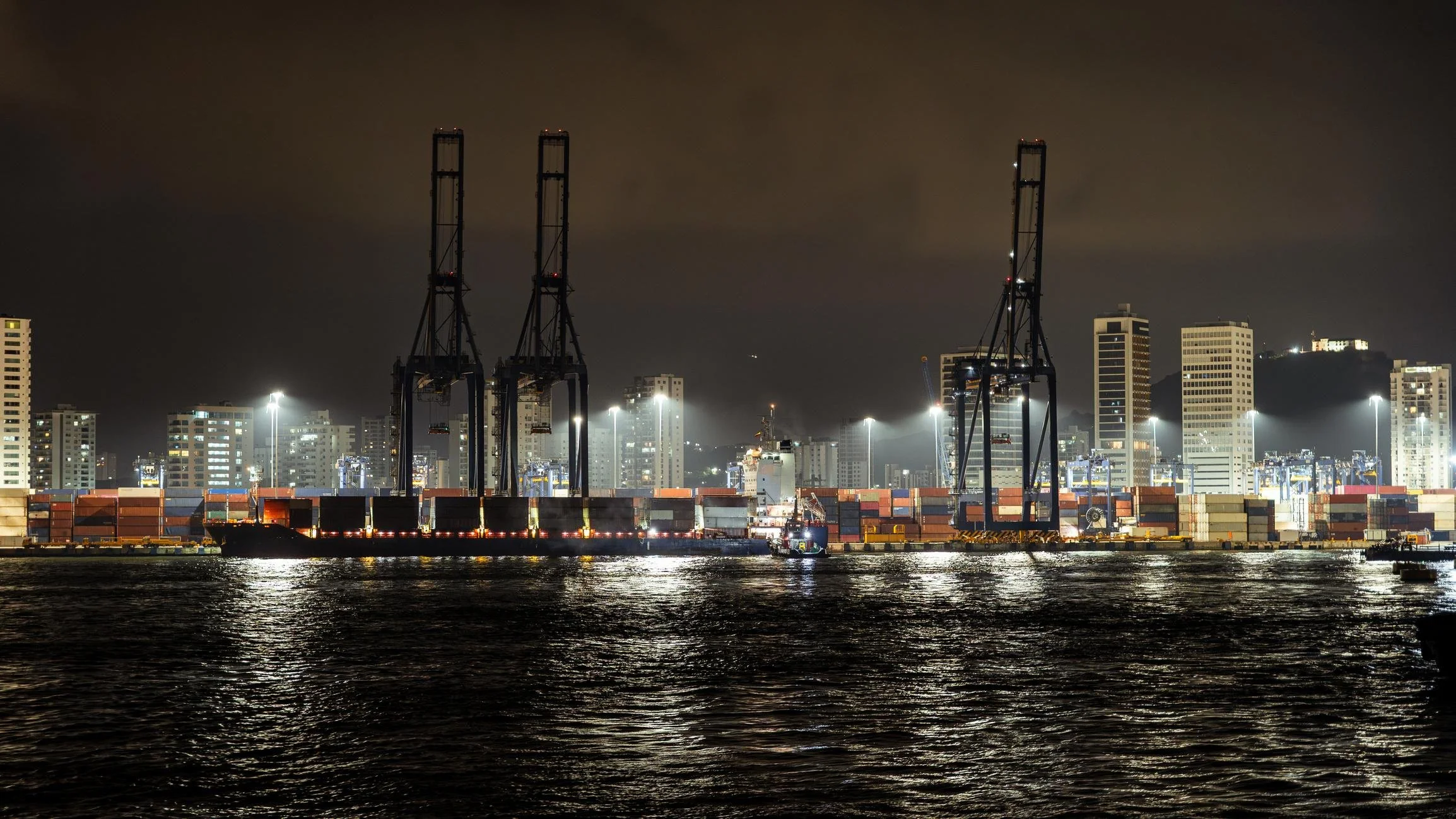
Recent reporting from CNBC underscores what logistics operators have felt for years: automation across shipping, warehousing, and freight networks is no longer experimental. It is accelerating because the economics demand it.
Labor constraints, rising throughput expectations, and margin compression are reshaping the operating model of the supply chain. Companies that once relied on scale through headcount are now turning toward robotics, AI-driven routing, automated yard systems, and data-centric warehouse management platforms to maintain service levels while protecting profitability.
From SecurCapital’s standpoint, automation is not simply an operational enhancement. It is a capital strategy.
Across ports, cross-docks, and distribution facilities, automation is reducing volatility in performance. Throughput becomes more predictable. Error rates decline. Visibility improves. That predictability matters to customers, but it also matters to investors. Logistics businesses that demonstrate scalable infrastructure and real-time data transparency are positioned differently in capital markets than those dependent on manual processes and reactive management.
The pressure driving this shift is structural. E-commerce has permanently altered fulfillment speed expectations. Nearshoring is redirecting freight flows into North American corridors. Border markets are absorbing higher volumes, often without proportional increases in available labor. In this environment, automation becomes a stabilizer. It enhances yard efficiency, shortens dwell times, and enables facilities to process greater volume without proportionally increasing overhead.
However, automation deployed without strategic planning can erode value just as quickly as it creates it. Too often, organizations pursue technology upgrades without fully modeling ROI, integration costs, or long-term facility design implications. Robotics layered onto inefficient workflows simply magnifies inefficiency at higher capital expense.
This is where disciplined capital advisory becomes essential.
SecurCapital works alongside operators to evaluate automation not as a standalone investment, but as part of a broader operational and growth thesis. Decisions around warehouse robotics, AI-driven forecasting, or automated handling systems must align with acquisition strategy, expansion planning, and long-term valuation goals. Payback periods must be modeled against realistic throughput assumptions. Financing structures must protect liquidity. Facility design must allow for phased scalability.
When capital structure and operational modernization move in parallel, automation compounds returns.
There is also a workforce dimension that cannot be ignored. Automation does not eliminate the need for people. It reshapes roles. Skilled technicians, systems analysts, and data-driven supervisors replace repetitive manual positions. Companies that approach automation with a retraining and transition strategy protect culture while improving efficiency. Companies that treat automation purely as cost-cutting risk operational friction and talent instability.
The logistics sector is entering a period where baseline expectations have permanently shifted. Real-time dashboards are no longer differentiators. They are standard. Predictive routing is becoming routine. Automated container handling is expanding across global ports. Organizations that delay modernization may find themselves competing on thinner margins with less operational resilience.
The question is not whether automation will define the next decade of shipping. It already is. The question is whether operators will implement it reactively under pressure or proactively within a disciplined growth framework.
SecurCapital supports logistics companies that choose the latter. By aligning capital strategy, operational modeling, and modernization planning, we help build supply chain platforms designed not just to survive change, but to scale with it.